|
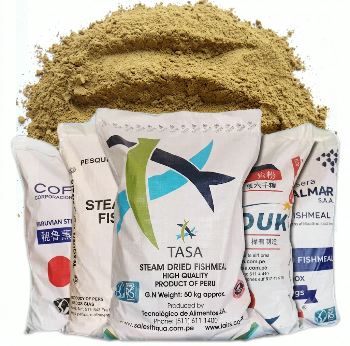
Photo: Stockfile/FIS
China’s Aquafeed Boom Collides with High Peruvian Meal Replacement Costs
 WORLDWIDE WORLDWIDE
Monday, August 03, 2026, 00:10 (GMT + 9)
Aquafeed Expansion Contrasts with Buyer Caution and Import Parity Reversal
The robust growth in Chinese aquafeed production contrasts with the caution of its fishmeal (Engraulis ringens) buyers. Port inventories are currently capping domestic prices, but replacing them with Peruvian product would cost approximately RMB 1,500 (US$ 222) per tonne more than the value observed in the local market.

China’s aquafeed production is undergoing rapid expansion, yet this growth has not yet translated into equivalent buying pressure on imported seafood ingredients. Existing port stocks allow feed millers to consume current inventories and delay new transactions while the cost of replacing Peruvian meal remains significantly above domestic prices.
China produced 168.5 million tonnes of industrial feed during the first half of 2026, a year-on-year increase of 3.9%, according to data released by the China Feed Industry Association and the livestock and veterinary authority of the Ministry of Agriculture and Rural Affairs.
Within that volume, aquafeed production reached 11.1 million tonnes, up 17.4% from a year earlier. Growth was even stronger in the marine segment, which advanced 34.7%, while freshwater species feed grew by 14.5%.
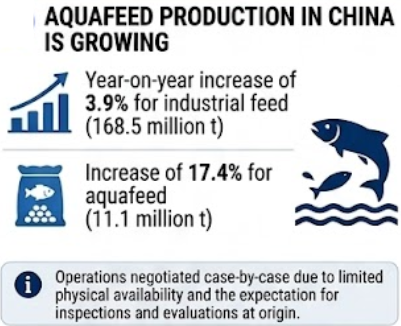
These figures outline a dynamic potential consumption base for marine ingredients. However, the situation observed in late July demonstrates that aquafeed growth does not automatically lead to a proportional and immediate increase in fish and seafood meal purchases.
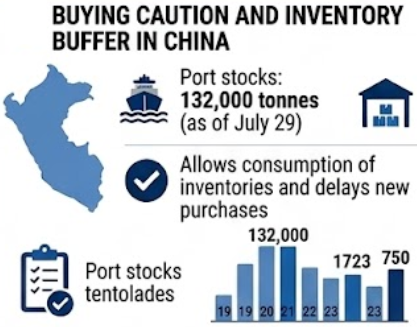
According to the Chinese commercial intelligence firm JCI, fishmeal stocks at the country's main ports stood at around 132,000 tonnes on July 29. This volume represented a 2.3% increase from the minimum recorded in mid-month.
This inventory acts as a temporary buffer. Manufacturers can draw on previously acquired stock and avoid new purchases when imported costs do not align with the prices obtainable in the domestic market.
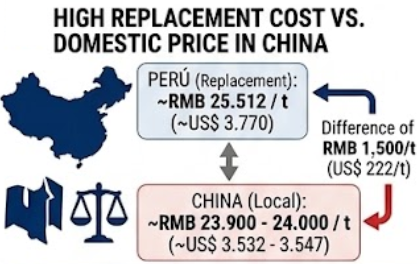
JCI placed super-prime fishmeal quotes in Shanghai, Guangdong, and Dalian between RMB 23,900 (US$ 3,532) and RMB 24,000 (US$ 3,547) per tonne amid sluggish trading activity. Concurrently, the reference for Peruvian super-prime meal rose from US$ 3,300 per tonne CNF on July 27 to US$ 3,500 on July 28 and US$ 3,700 on July 29.
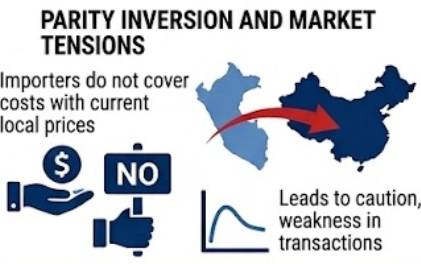
Based on that reference, JCI calculated a theoretical import cost of RMB 25,512 (US$ 3,770) per tonne. The gap against domestic prices reached approximately RMB 1,512 (US$ 223) per tonne.
This parity reversal means an importer purchasing Peruvian product at the indicated benchmark could not fully recover costs by selling at prevailing Chinese port prices, even before accounting for financing, commercial, or storage expenses.
The market can resolve this gap in three ways: through a rise in Chinese domestic prices, a correction in Peruvian offers, or a temporary reduction in trading while buyers draw down inventories. For now, weak transaction activity suggests the third option is playing a major role.
However, the 132,000 tonnes on hand should not automatically be interpreted as a sign of abundance. The increase is measured from a recent low, and open sources lack a full breakdown by port, origin, quality, owner, or committed volume. Nor is it precisely clear how many days of consumption this inventory represents across different industry segments.
Peru Concentrates Replacement Risk
The pressure on import costs stems primarily from uncertainty surrounding the Peruvian anchovy (Engraulis ringens) supply.
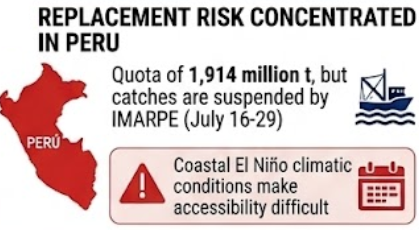
The Ministry of Production of Peru authorized the first 2026 fishing season in the north-center zone with a quota of 1,914,049 tonnes. Nonetheless, a nominal quota does not automatically translate into landings, processed output, or export-ready cargo.
JCI reported that fishing operations remained suspended while the Marine Institute of Peru (IMARPE) conducted a specialized survey between July 16 and July 29. At the time of this analysis, neither the final survey report nor a reopening decision had been published in official sources, meaning potential biological results cannot yet be confirmed.
Environmental conditions do have official backing. The ENFEN committee maintained its Coastal El Niño alert, noting that anchovy (Engraulis ringens) would likely remain closer to the coast and at greater depths, while expending more energy reserves. These conditions could affect resource accessibility, fish condition, and processing yields.
The tight export availability noted by JCI helps explain the rapid rise in CNF references. However, US$ 3,700 per tonne should be understood as an indicator of marginal costs and seller positioning rather than the average price of all executed trades. Market reports themselves emphasize that actual transactions were limited.
Higher Feed Volume, Lower Inclusion Per Tonne
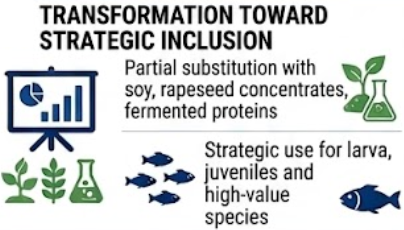
Tension between aquafeed demand, inventory levels, and replacement costs may accelerate an ongoing shift: the transition of fish and seafood meal from a broad bulk ingredient to a strategic input reserved for high-value biological applications.
Facing elevated prices, feed manufacturers may reduce inclusion in flexible formulations while preserving it in diets for larvae, juveniles, shrimp, marine fish, and other species or stages sensitive to digestibility and palatability.
Substitution may favor soy or rapeseed protein concentrates, fermented proteins, land animal byproduct meals where permitted, amino acids, enzymes, and palatability enhancers. However, replacing seafood meal is not merely a matter of matching crude protein levels.
Marine meal provides digestible amino acids, minerals, attractive flavor compounds, and functional fractions. Poorly balanced reformulations can lower feed intake, worsen feed conversion ratios, or undermine growth and health. Savings must be measured by unit of production performance rather than ingredient cost per tonne alone.
Consequently, China’s 17.4% growth in aquafeed could coexist with far less dynamic fish and seafood meal consumption if average inclusion rates decline. Industry sources describe substitution as an active market response, though primary metrics quantifying reductions by species, life stage, or manufacturer are not yet available.

A temporal distinction must also be noted. The Chinese first-half report indicates average imported meal prices were lower than in the same period of 2025, whereas JCI references show sharp marginal price increases in late July. These data points are compatible: the former covers a six-month broad import average, while the latter reflects a specific spot reference for Peruvian super-prime meal.
The decisive question for upcoming weeks is how long China can maintain this decoupling between domestic prices and replacement costs. If Peru does not normalize supply before port inventories decline further, buyers will have to accept higher prices, deepen formulation changes, or curtail operations even more.
Inventories buy time, but they do not eliminate the structural imbalance. In a expanding aquafeed market, every tonne consumed brings domestic prices closer to a mandatory convergence with the true cost of importing.
🇯🇵 日本語 (Japanese Version)
中国の水産飼料生産ラッシュ、ペルー産魚粉の高騰する補充コストと衝突
水産飼料セクターの拡大と買主の慎重姿勢および輸入パリティの逆転現象
中国における水産飼料生産の力強い成長は、魚粉(Engraulis ringens)バイヤーの慎重な姿勢と対照的な動きを見せています。港湾在庫が国内価格の上昇を一時的に抑えているものの、ペルー産製品による補充コストは現地市場の価格を RMB 1,500(US$ 222)/t 以上上回る状態が続いています。
中国の水産飼料生産は急速な拡大期にありますが、この成長が輸入水産物原料への積極的な購買力へと直ちに結びついているわけではありません。港湾に十分な在庫が存在することで、飼料メーカーは新規取引を先送りしながら手元在庫を消費できており、ペルー産魚粉の補充コストは国内価格を明らかに上回っています。
中国農業農村部の畜産獣医局および中国飼料工業協会が発表したデータによると、中国の2026年上半期における工業用飼料生産量は前年同期比 3.9% 増の 1億6,850万t に達しました。
そのうち、水産飼料の生産量は 1,110万t に達し、前年同期比 17.4% 増となりました。成長は海水生け簀・養殖分野で特に顕著であり、34.7% 増を記録した一方、淡水魚向け飼料は 14.5% 増となりました。
これらの数値は海洋原料に対する需要基盤の力強さを示しています。しかし、7月下旬の状況を見ると、水産飼料の増産が必ずしも水産物・魚介類由来の魚粉買付量に比例した即時増加を意味しないことが浮き彫りになっています。
中国の市場情報機関 JCI によると、7月29日時点における同国の主要港湾における魚粉在庫は約 13万2,000t でした。この水準は月中旬に記録した直近安値から 2.3% の増加を示しています。
この在庫が一時的な緩衝材として機能しています。輸入コストが国内販売可能価格と見合わない場合、メーカーは過去に調達した製品を活用し、新規買い付けを回避することが可能です。
JCI の報告によると、上海、広東、大連におけるスーパープライム級魚粉の提示価格は、取引が低調な中で RMB 23,900(US$ 3,532)〜 RMB 24,000(US$ 3,547)/t の範囲で推移しました。一方で、ペルー産スーパープライム級の指標価格は 7月27日の CNF US$ 3,300/t から 28日には US$ 3,500、29日には US$ 3,700 へと急騰しました。
この指標に基づき、JCI は理論上の輸入コストを RMB 25,512(US$ 3,770)/t と算出しました。国内価格との格差は約 RMB 1,512(US$ 223)/t に達しています。
この逆パリティ状態は、提示された指標価格でペルー産製品を購入した輸入業者が、金融、商業、保管などの諸経費を考慮する前であっても、中国港湾での現行価格で販売した場合にコストを完全に回収できないことを意味します。
市場がこの価格差を解消する方法は3つあります。中国国内価格の上昇、ペルー側のオファー価格の調整、あるいはバイヤーが在庫を消費する間の一時的な取引抑制です。現状、取引の低迷は3番目の選択肢が大きな役割を果たしていることを示唆しています。
ただし、手元にある 13万2,000t の在庫をただちに潤沢な状態と解釈すべきではありません。この増加は最近の低水準からの回復に過ぎず、公開情報には港別、原産地別、品質別、所有者別、あるいは契約済み数量の明確な内訳が含まれていません。また、この在庫が業界の各セグメントにとって何日分の消費量に相当するかも正確には不明です。
ペルーに集中する補充リスク
輸入コストに対する圧力の主な要因は、ペルー産アンチョビ(Engraulis ringens)の供給をめぐる不透明感にあります。
ペルー生産省は、北部・中部海域における 2026年の第1回漁期枠として 1,914,049t を設定しました。しかし、名目上の枠設定が直ちに水揚げ量、製品生産量、または輸出可能在庫へと結びつくわけではありません。
JCI によると、ペルー海洋研究所(IMARPE)が 7月16日から 29日にかけて実施した専門調査の間、操業は中断されていました。分析の時点で、公式情報源からこの調査の最終報告書やその後の漁業再開決定は確認されておらず、生物学的結果を確定させることはできません。
環境要因については公的データが存在します。ENFEN 委員会は沿岸性エルニーニョの警戒状態を維持しており、アンチョビ(Engraulis ringens)がより沿岸寄りかつ深海に移動し、エネルギー消費が増大する傾向にあると指摘しています。これらの条件は資源へのアクセス、魚体コンディション、歩留まりに影響を与える可能性があります。
JCI が記述する限定的な輸出可能量は、CNF指標価格の急速な上昇を説明する要因となっています。ただし、US$ 3,700/t という価格は売り手の限界コストや姿勢を示すシグナルであり、実行された全取引の平均価格を反映しているとは限りません。市場情報自体も取引が限られていたことを強調しています。
飼料生産量の増加と1tあたりの配合率低下
水産飼料需要、在庫水準、補充コストの間の緊張は、すでに進行中であった構造変化を加速させる可能性があります。すなわち、水産物・魚介類由来の魚粉が汎用原料から、生物学的リターンが最も高い用途に限定された戦略的資材へとシフトする動きです。
高価格に直面したメーカーは、柔軟性の高い配合飼料における魚粉使用量を削減する一方、幼生、稚魚、エビ、海水魚など、消化性や嗜好性に敏感な種類や成長段階向けの飼料では使用を維持する傾向を強めます。
代替原料としては、大豆濃縮タンパク、ナタネ濃縮タンパク、発酵タンパク、利用が許可されている陸生動物副産物粉末、アミノ酸、酵素、嗜好性向上剤などが挙げられます。しかし、水産物由来魚粉の代替は、単に粗タンパク質割合を合わせるだけでは達成できません。
海洋性魚粉は、消化しやすいアミノ酸、ミネラル、嗜好性成分、機能性画分を提供します。バランスを欠いた配合変更は、飼料摂取量の低下、飼料要求率の悪化、成長や健康への悪影響を引き起こす可能性があります。コスト削減は原料1tあたりの価格だけでなく、生産パフォーマンス単位で評価される必要があります。
したがって、中国における水産飼料の 17.4% という伸びは、平均配合率が低下した場合、水産物・魚介類由来魚粉の消費増とは必ずしも連動しない可能性があります。業界関係者はこの代替策を市場の現実的な対応として説明していますが、魚種別、生産段階別、あるいはメーカー別の削減量を定量化する一次データはまだ得られていません。
時間軸の違いにも留意する必要があります。中国の第1四半期報告によると、輸入魚粉の平均価格は 2025年同期を下回っていましたが、JCI のデータは 7月下旬における限界価格の急上昇を示しています。これらは矛盾するデータではなく、前者が6ヶ月間の広範な輸入平均をカバーしているのに対し、後者はペルー産スーパープライム級のスポット価格を反映しているためです。
今後数週間の決定的な焦点は、中国が国内価格と補充コストの乖離をどこまで維持できるかという点にあります。港湾在庫が底を突く前にペルーからの供給が正常化しない場合、バイヤーは高値を受け入れるか、配合の変更を一段と進めるか、あるいは操業自体を抑制せざるを得なくなります。
在庫は時間を稼ぐ手段にはなりますが、不均衡そのものを解消するわけではありません。拡大を続ける水産飼料市場において、消費が進むごとに、国内価格が輸入の真のコストと再統合する瞬間へと近づいています。
🇨🇳 简体中文 (Simplified Chinese Version)
中国水产饲料热潮遭遇秘鲁鱼粉高昂补货成本瓶颈
水产饲料部门扩张与买家谨慎态度及进口平价倒挂形成鲜明对比
中国水产饲料生产的强劲增长与鱼粉(Engraulis ringens)买家的谨慎观望形成鲜明对比。目前港口库存暂时压制了国内价格,但若使用秘鲁产品进行补货,其成本比本地市场观察到的价格高出约 RMB 1,500(US$ 222)/吨。
中国水产饲料生产正经历加速扩张,但这一增长尚未转化为对进口水产品原料的同等采购压力。现有的港口库存允许饲料制造商消耗既有库存并推迟新交易,而秘鲁鱼粉的补货成本明显高于国内价格。
根据中国饲料工业协会及农业农村部畜牧兽医局发布的数据,中国在 2026年 上半年生产了 1.685亿吨 工业饲料,同比增长 3.9%。
在这一总量中,水产饲料产量达到 1,110万吨,同比增长 17.4%。海水养殖饲料领域的增长更为强劲,增幅达 34.7%,而淡水物种饲料增长了 14.5%。
这些数据展示了水产原料极具活力的潜在消费基础。然而,7月 下旬观察到的情况表明,水产饲料的增长并不必然导致海鲜及水产鱼粉采购量的同步即时增加。
根据中国商业情报机构 JCI 的数据,截至 7月29日,中国主要港口的鱼粉库存约为 13.2万吨。这一数量较月中记录的近期低点增长了 2.3%。
这一库存起到了临时缓冲垫的作用。当进口成本与国内市场可获得的价格脱节时,制造商可以利用先前采购的产品,避免执行新采购。
JCI 将上海、广东和大连的超级特级鱼粉报价定在 RMB 23,900(US$ 3,532)至 RMB 24,000(US$ 3,547)/吨之间,市场交易整体平淡。与此同时,秘鲁超级特级鱼粉的参考价格从 7月27日 的 US$ 3,300/吨 CNF 上涨至 28日 的 US$ 3,500,并在 7月29日 达到 US$ 3,700。
基于该参考价,JCI 计算出理论进口成本为 RMB 25,512(US$ 3,770)/吨。与国内价格的价差达到了约 RMB 1,512(US$ 223)/吨。
这种平价倒挂意味着,即便不考虑融资、商业或仓储费用,进口商若按上述参考价购买秘鲁产品,也无法通过按中国港口现行价格销售来完全收回成本。
市场可以通过三种方式解决这一价差:中国国内价格上涨、秘鲁报价修正,或者在买家消耗库存期间暂时减少交易。目前交易的疲软表明,第三种选择正在发挥重要作用。
然而,手头的 13.2万吨 库存不应自动解读为供应充裕。该增长是基于近期低点计算得出,且公开调阅的资料中缺乏按港口、来源、质量、所有者或已售合同划分的详细数据。目前也不清楚这些库存具体能满足不同细分行业多少天的消费需求。
秘鲁集中了补货风险
进口成本的压力主要源于秘鲁鳀鱼(Engraulis ringens)供应的不确定性。
秘鲁生产部批准了 2026年 中北部海域的第一个捕捞季,配额为 1,914,049吨。然而,名义配额并不自动等同于实际捕捞量、加工成品或可供出口的货源。
JCI 报告称,在秘鲁海洋研究所(IMARPE)于 7月16日 至 29日 期间进行专项调查时,捕捞活动处于暂停状态。截至本分析完成时,在官方公开渠道中尚未找到该调查的最终报告或随后的复工决定,因此其潜在的生物学结果尚无法确认。
环境背景确实有官方数据支持。ENFEN 委员会维持了沿岸型厄尔尼诺现象的警报,并指出鳀鱼(Engraulis ringens)倾向于更接近海岸和更深的水域,同时消耗更多的能量储备。这些条件可能会影响资源的可获得性、鱼体状况和工业出粉率。
JCI 所描述的有限出口供应量有助于解释 CNF 参考价的高速上涨。然而,US$ 3,700/吨应被理解为边际成本和卖家立场的信号,而不一定代表所有实际成交的平均价格。市场报告本身也强调实际成交数量极其有限。
饲料总量增加,但每吨添加比例下降
水产饲料需求、库存水平和补货成本之间的紧张关系可能会加速一项正在进行的结构性转变:即海鲜及水产鱼粉从一种广泛使用的基础原料,转变为专门用于高生物回报用途的战略性投料。
面对高昂的价格,制造商可能会在配方弹性较大的饲料中减少鱼粉添加量,而在幼体、幼鱼、对虾、海水鱼以及其他对消化率和适口性高度敏感的物种或生长阶段的饲料中保留其使用。
替代方案可能会倾向于大豆或菜籽浓缩蛋白、发酵蛋白、合规的陆生动物副产品粉、氨基酸、酶制剂和适口性增强剂。然而,替代水产品鱼粉不仅仅是凑齐粗蛋白比例那么简单。
海洋鱼粉还提供易消化的氨基酸、矿物质、风味化合物和功能性组分。配方改变若失衡,可能会降低饲料摄入量,恶化饲料转化率,或损害动物的生长与健康。成本节省必须以单位生产绩效来衡量,而不仅仅看每吨原料的价格。
因此,如果平均添加率下降,中国水产饲料 17.4% 的增长可能会与海鲜及水产鱼粉消费乏力的状况共存。行业来源将这种替代描述为市场的积极应对,但目前尚缺少按物种、生产阶段或制造商划分的具体量化数据。
此外,还必须注意时间跨度上的差异。中国上半年的报告显示,进口鱼粉的平均价格低于 2025年 同期,而 JCI 的数据则显示 7月 下旬边际价格大幅上涨。这两者并不矛盾:前者涵盖了 6个月 的广义进口平均值;后者则反映了秘鲁超级特级鱼粉的特定现货参考价。
未来几周的关键问题在于中国能在多长时间内维持国内价格与补货成本之间的脱节。如果秘鲁在港口库存进一步下降之前无法恢复正常供应,买家将不得不接受更高价格、进一步调整配方,或者更大幅度地限制生产。
库存争取了时间,但并未消除供需失衡。在快速扩张的水产饲料市场中,每消耗一吨库存,都使国内价格距离与实际进口成本的强制回归更近一步。
editorial@seafood.media
www.seafood.media
|





 Print
Print